
Few things are more jarring than stepping into a freezing cold shower on a Monday morning. But a lack of hot water is actually the best-case scenario when a water heater fails.
The worst-case scenario? Coming home to find your garage or utility closet flooded because the bottom fell out of your old tank. Water heater failures cause millions of dollars in water damage every year.
At Plumber 007 in Paramount, we believe in proactive defense. Most water heaters don’t just suddenly quit; they give off distress signals for weeks or months first. If you notice any of these three signs, it’s time to call in the professionals before disaster strikes.
1. The Age Factor: It’s Living on Borrowed Time
The single biggest indicator of a pending failure isn’t a noise or a leak; it’s a date on a calendar.
The average lifespan of a traditional tank-style water heater is 8 to 12 years. If yours is older than 10, it is statistically living on borrowed time. Even if it seems to be working fine, the internal components and the tank walls are wearing thin.
How to check: Look for the manufacturer’s sticker on the side of the tank. Find the serial number. The first few numbers or letters usually indicate the month and year of manufacture (you may need to Google the brand name + “serial number decoder”).
2. Rusty or Discolored Hot Water
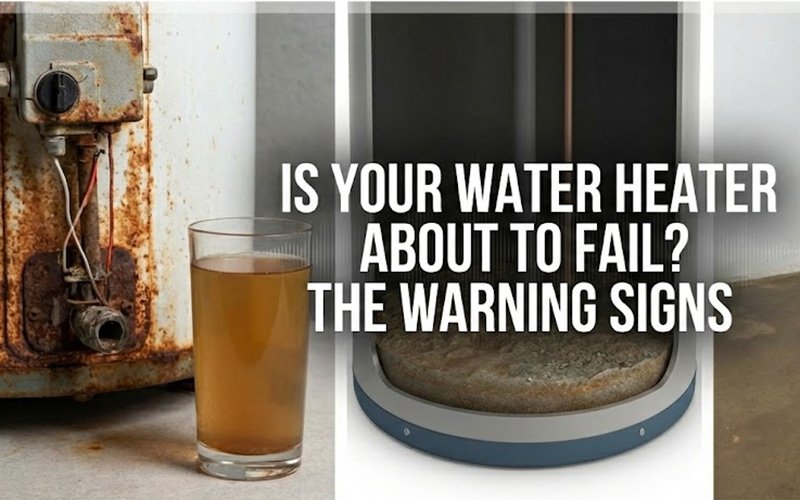
If you turn on the hot tap and yellowish, brownish, or metallic-smelling water comes out, your water heater is rusting from the inside out.
Steel water heater tanks have a component called an “anode rod.” Its sole job is to attract corrosive elements so the tank itself doesn’t rust. Once that rod is completely eaten away, the corrosive elements attack the tank walls. Once rust starts, a leak is inevitable.
The Test: Turn on the cold water tap. If it runs clear, but the hot water is discolored, the problem is definitely your water heater, not your house pipes.
3. Strange Noises: Popping, Banging, or Rumbling
A healthy water heater should be relatively quiet. If your utility closet sounds like it’s making popcorn or harboring a small thunderstorm, you have a problem.
Here in Paramount, our hard water contains minerals. Over time, this sediment settles at the bottom of the tank where the heating burner is located. As the water gets trapped under this thick layer of sediment, it turns to steam and explodes upward, making loud popping or banging sounds.
This sediment layer makes the unit work harder, increasing your energy bills, and the constant “explosions” weaken the bottom of the tank until it eventually cracks.
Don’t Wait for the Flood. Call Plumber 007.
If you spotted any of these warning signs, do not ignore them. Replacing a water heater proactively is far cheaper and less stressful than dealing with emergency water damage restoration at 2:00 AM.
Our experts can assess the health of your current unit and, if necessary, help you choose and install a new, energy-efficient model that fits your home’s needs.
Secure your home against water damage. Contact Plumber 007 today for a water heater inspection or quote.